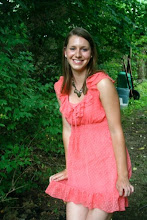
Presenting the long-awaited cheaptickets.com commercial contest video, starring Miss Rex and The Pantsless One (conveniently clothed for this episode)!
We were shooting for 50 grand but we didn't even make it into the finals. Hard to believe, eh?
But hey, 'twas a learning experience. Now I know how not to light a green screen, but that a decent one can be made for under $10. I know that you should never use the on-camera microphone, but that decent sound effects can be made with a little resourcefulness and imagination. And look at all the fun costumes I got to wear! (Oh god, I nearly died in that snowsuit under all those lights...)
Now let's play a game. With the exception of the flute playing in the Paris scene, all sound effects were created right in my studio (read: bedroom) with everyday household items. Who can figure out what I used?
Peace, love, and not coconuts,
Miss Rex
Showing posts with label travel. Show all posts
Showing posts with label travel. Show all posts
Photofinish Friday: Tales of the Texans pt. 2
Most of these are from the Botanical Gardens in Fort Worth, Texas. I wish my biology class would spend more time learning about giant trees and flowers and less time studying the intricacies of phospholipid bi-layers.


Peace, love and hydrophobic tails,
Miss Rex


Peace, love and hydrophobic tails,
Miss Rex

Tales of the Texans
Today I finished work on a video project I'm entering into a contest at cheaptickets.com. The contest was to create a 30-second advertisement for the site. I'm quite pleased with the result, but I'm not posting it until the judges have had a chance to look at it. For now I'll tell you this: It involved a million little hole-punched circles, a box of rice, me wearing a bathing suit and snorkel on camera, and such lovely pictures as this:

Bet you're salivating at the mere thought of 30 whole seconds of this AWESOMENESS.
Until I can share the video, I have many a photo to share from my trip to Texas for my cousin's wedding. Here's the first batch.


Peace, love and zucchini muffins,
Miss Rex

Bet you're salivating at the mere thought of 30 whole seconds of this AWESOMENESS.
Until I can share the video, I have many a photo to share from my trip to Texas for my cousin's wedding. Here's the first batch.


Peace, love and zucchini muffins,
Miss Rex
Sitting in a tree, K-I-S-S-I-N-G
Wow. It really is true: Boys are the same across the board, regardless of age or religion or nationality.
Today my littlest, cutest camper was wearing a big, red ring on one of his fingers. One of my other kids told him that meant he had to kiss a girl, and the littler one accepted this without question. The bigger one then went on to coach him, helping him decide which girl to kiss and how to go about it.
Seeing as they're three, I saw no reason to put a stop to their scheming. Little did I know I was the selected target.
For the next hour I kept hearing, "Now, Shane!" This was invariably followed by a little kid barreling into my leg, wrapping his arms around it, and kissing my thigh (the highest he could reach) with a very loud and enthusiastic *smack.*
Now rewind about a month. It was my last night in Italy, and one of my companions had been pulling the 21-year-old equivalent of "Now, Shane!" for at least three days, trying to get one of the Italians we'd befriended to kiss me on the cheek.
Let it be known that I was more than okay with this plan. And he did finally go through with it. I guess the make-out sesh that happened afterward was where the situations varied...
But I'd say the evidence more than supports my hypothesis.
Peace, love and portobello mushrooms,
Miss Rex
Today my littlest, cutest camper was wearing a big, red ring on one of his fingers. One of my other kids told him that meant he had to kiss a girl, and the littler one accepted this without question. The bigger one then went on to coach him, helping him decide which girl to kiss and how to go about it.
Seeing as they're three, I saw no reason to put a stop to their scheming. Little did I know I was the selected target.
For the next hour I kept hearing, "Now, Shane!" This was invariably followed by a little kid barreling into my leg, wrapping his arms around it, and kissing my thigh (the highest he could reach) with a very loud and enthusiastic *smack.*
Now rewind about a month. It was my last night in Italy, and one of my companions had been pulling the 21-year-old equivalent of "Now, Shane!" for at least three days, trying to get one of the Italians we'd befriended to kiss me on the cheek.
Let it be known that I was more than okay with this plan. And he did finally go through with it. I guess the make-out sesh that happened afterward was where the situations varied...
But I'd say the evidence more than supports my hypothesis.
Peace, love and portobello mushrooms,
Miss Rex
Final thoughts on Rome, and VIDEO!
Rome may not be the center of the world anymore, but try telling that to the eight million tourists milling around the Vatican. For the number of people here and for the diversity of language and race, it’s easy to forget that all roads no longer lead to Rome. But the bustle of the city also begs the question: Has Rome been too commercialized? Or does it still retain some of the ancient magic that made it a cultural hub years ago? I think the answer is, “both.”
I believe it’s important for people to come here and see the artifacts and sites. It provokes a connection and sense of reverence regarding history that can only be gained in a hands-on way. It’s mind-boggling to picture a group of people more or less like me erecting hundred-foot-tall stone columns at their public forums or the thousand arches of the Coliseum, not out of aesthetic ambition but for practical use. Just as I walk to the dining hall and then to the chapel and then to the library each day without a thought, the ancient Romans worked, ate, worshiped, played and studied in these majestic structures every day.
Imagining a population for whom these sights were ordinary offers a moving peek into history that we are fortunate to have.
Beyond even that, structures such as the crumbling Coliseum remind us that no earthly empire is everlasting, no matter how vast or powerful. I am reminded of the poem “Ozymandias” by Percy Bysshe Shelley, which tells of a traveler who found the ruins of a huge statue. An inscription reads, “Look on my works, ye mighty, and despair.” Ozymandias thought his kingdom would last forever. In the same way, people thought Rome would never fall. Neither is with us anymore. It’s not hard to imagine tourists visiting the United States in a few millennia to see what’s left of the Pentagon or Mount Rushmore. It’s a sobering thought, but I think people need to grasp the transience of all we take for granted – not only so we can appreciate the good things we have, but also so we can learn to hold those things loosely, assigning greater value to the intangible qualities of culture.
Yet on the other hand, the commercialized aspect of the tourist scene makes me cringe, and it’s more than the pressing crowds that make me feel that way. It seems somehow wrong to “go see the Vatican,” a place that was built to be holy and honoring to God. It’s not a museum. It’s holy ground (or should be). I’m glad the Pope still used it for his weekly message and that pilgrims still worship there. In this way, it is still being used for its intended purpose. On the other hand, I think the builders’ original vision for some of the other monuments has been lost.
But then, we have progressed. Maybe it is too much to ask that a new culture in a new millennium cling to the values of a culture so old we can hardly understand it. To the ancient Romans, watching lions eat Christians was quality entertainment. It would turn our stomachs today. For us, it would be sick to reinstate gladiatorial fights in the Coliseum, yet I believe it is a good thing to use that space as the public arena it was meant to be. I heard there was recently a concert there. Surely the designers did not intend for power chords to resonate through the stone arches. At the same time, this use of the Coliseum holds true to a purpose the architects may not have intended, but which is nonetheless as old as the structure itself: spectacle.
The real disrespect is the way vendors and con artists have turned the historical and religious sites into marketplaces and stages for robbery. Walking out of the Vatican, souvenir shop windows display tacky gold souvenirs plastered with the face of the Pope as if he were some flamboyant celebrity. It makes me think of the Bible story about Jesus overturning the tables in the sanctuary. It’s an even greater shame that portions of the city, including some of the most ancient sites, bear the artwork and tags of vandals.
All else aside, the fact that the new Rome reflects aspects of the greater global culture can hardly be pegged as a bad thing. Global culture values green space. One can see this in the city of Rome. As a matter of fact, the Italians have valued green space for centuries. In the center of the city you’ll find the gardens of the Borghese palace, a sprawling grassy space with paths for horseback riders and knolls for picnickers. Trees are scattered about and green and yellow birds fight scrawny brown squirrels for branch space. The gardens have been there for six hundred years, way before the rest of the world had even begun to create the pollution we are now desperate to eliminate with our city parks and nature reservations. Rome does not just open a window on ancient cultures; it spotlights today’s in a manner that even the culturally semi-literate can comprehend as a good thing, in spite of what may have been lost in the sweep of time and tourism.
------------------------------
And now for the much-slaved-over video, for which my video partner Tyler went to great lengths to procure a firewire cable (which connects the camcorder to the Mac) and for which he was pick-pocketed in the process:
Peace, love, and jet lag,
Miss Rex
I believe it’s important for people to come here and see the artifacts and sites. It provokes a connection and sense of reverence regarding history that can only be gained in a hands-on way. It’s mind-boggling to picture a group of people more or less like me erecting hundred-foot-tall stone columns at their public forums or the thousand arches of the Coliseum, not out of aesthetic ambition but for practical use. Just as I walk to the dining hall and then to the chapel and then to the library each day without a thought, the ancient Romans worked, ate, worshiped, played and studied in these majestic structures every day.
Imagining a population for whom these sights were ordinary offers a moving peek into history that we are fortunate to have.
Beyond even that, structures such as the crumbling Coliseum remind us that no earthly empire is everlasting, no matter how vast or powerful. I am reminded of the poem “Ozymandias” by Percy Bysshe Shelley, which tells of a traveler who found the ruins of a huge statue. An inscription reads, “Look on my works, ye mighty, and despair.” Ozymandias thought his kingdom would last forever. In the same way, people thought Rome would never fall. Neither is with us anymore. It’s not hard to imagine tourists visiting the United States in a few millennia to see what’s left of the Pentagon or Mount Rushmore. It’s a sobering thought, but I think people need to grasp the transience of all we take for granted – not only so we can appreciate the good things we have, but also so we can learn to hold those things loosely, assigning greater value to the intangible qualities of culture.
Yet on the other hand, the commercialized aspect of the tourist scene makes me cringe, and it’s more than the pressing crowds that make me feel that way. It seems somehow wrong to “go see the Vatican,” a place that was built to be holy and honoring to God. It’s not a museum. It’s holy ground (or should be). I’m glad the Pope still used it for his weekly message and that pilgrims still worship there. In this way, it is still being used for its intended purpose. On the other hand, I think the builders’ original vision for some of the other monuments has been lost.
But then, we have progressed. Maybe it is too much to ask that a new culture in a new millennium cling to the values of a culture so old we can hardly understand it. To the ancient Romans, watching lions eat Christians was quality entertainment. It would turn our stomachs today. For us, it would be sick to reinstate gladiatorial fights in the Coliseum, yet I believe it is a good thing to use that space as the public arena it was meant to be. I heard there was recently a concert there. Surely the designers did not intend for power chords to resonate through the stone arches. At the same time, this use of the Coliseum holds true to a purpose the architects may not have intended, but which is nonetheless as old as the structure itself: spectacle.
The real disrespect is the way vendors and con artists have turned the historical and religious sites into marketplaces and stages for robbery. Walking out of the Vatican, souvenir shop windows display tacky gold souvenirs plastered with the face of the Pope as if he were some flamboyant celebrity. It makes me think of the Bible story about Jesus overturning the tables in the sanctuary. It’s an even greater shame that portions of the city, including some of the most ancient sites, bear the artwork and tags of vandals.
All else aside, the fact that the new Rome reflects aspects of the greater global culture can hardly be pegged as a bad thing. Global culture values green space. One can see this in the city of Rome. As a matter of fact, the Italians have valued green space for centuries. In the center of the city you’ll find the gardens of the Borghese palace, a sprawling grassy space with paths for horseback riders and knolls for picnickers. Trees are scattered about and green and yellow birds fight scrawny brown squirrels for branch space. The gardens have been there for six hundred years, way before the rest of the world had even begun to create the pollution we are now desperate to eliminate with our city parks and nature reservations. Rome does not just open a window on ancient cultures; it spotlights today’s in a manner that even the culturally semi-literate can comprehend as a good thing, in spite of what may have been lost in the sweep of time and tourism.
------------------------------
And now for the much-slaved-over video, for which my video partner Tyler went to great lengths to procure a firewire cable (which connects the camcorder to the Mac) and for which he was pick-pocketed in the process:
Peace, love, and jet lag,
Miss Rex
Photofinish Friday: Arrivederci, Italia!
This morning, looking out the kitchen window at the sprawling green patchwork valley of Umbria, I realized that tomorrow will be the last morning that I will wake up to that view. Maybe I'll come back to Italy, maybe even to Assisi, but I probably won't live in this monastery.
It has been such a great trip and I have so many great stories to tell once I get home and get some sleep. A part of me is devastated to be leaving this beautiful country with its beautiful stone cities and beautiful gracious people, but it will be nice to be surrounded by people who speak English. Less stressful. And I miss my peeps. I think a whole semester abroad might have been stretching it, but someday I'd like to travel the world spending 2-week stints in different cities getting to know the local culture. To me that is far more valuable than any pictures I might take of monuments or any historical sights I might look at. In the end it's the people that matter, here, now, not the ones who died two thousand years ago after building the Coliseum.
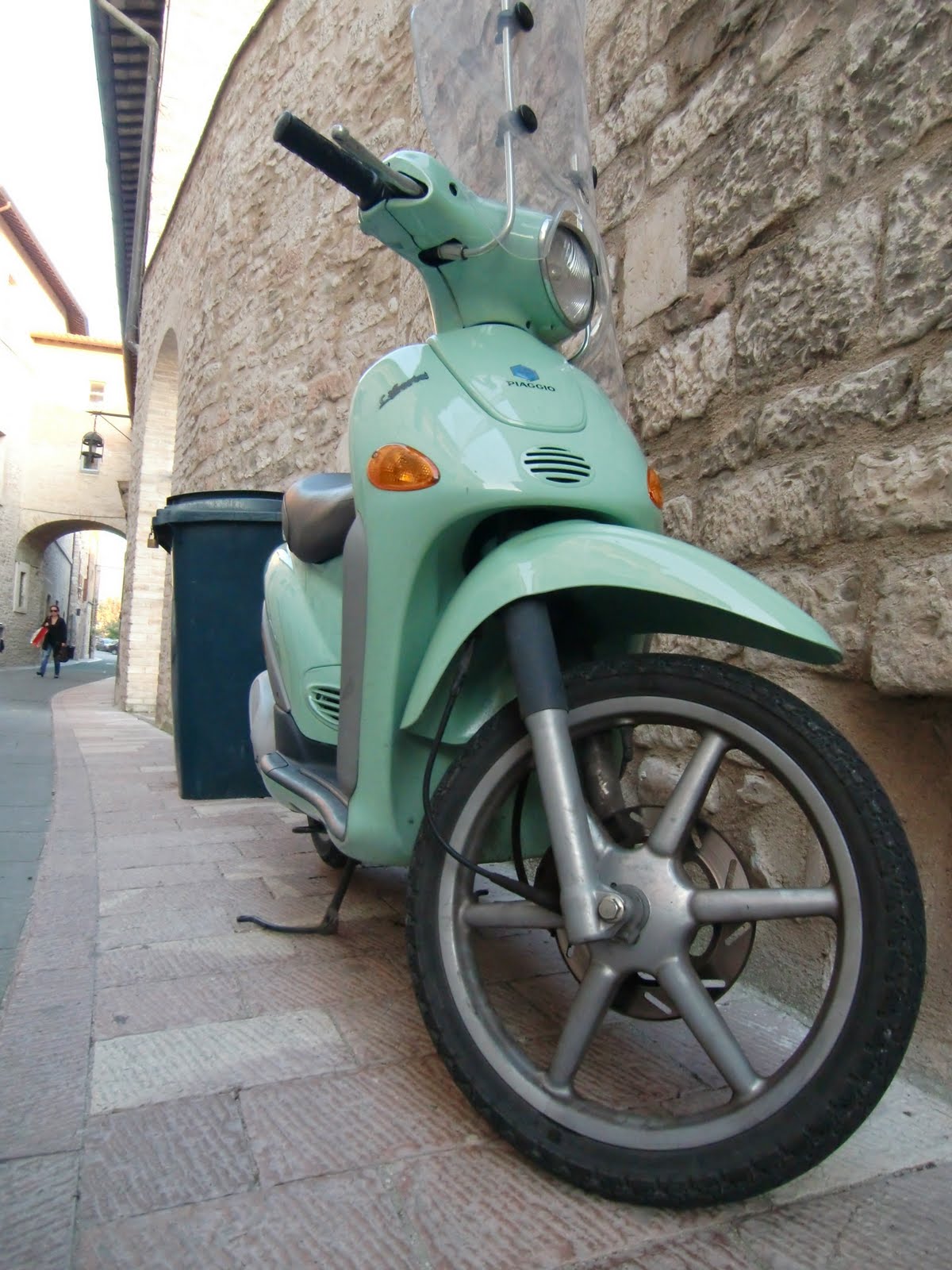
With that being said, enjoy my last batch of Assisi photographs!


Peace, love and arrivederci,
Miss Rex
It has been such a great trip and I have so many great stories to tell once I get home and get some sleep. A part of me is devastated to be leaving this beautiful country with its beautiful stone cities and beautiful gracious people, but it will be nice to be surrounded by people who speak English. Less stressful. And I miss my peeps. I think a whole semester abroad might have been stretching it, but someday I'd like to travel the world spending 2-week stints in different cities getting to know the local culture. To me that is far more valuable than any pictures I might take of monuments or any historical sights I might look at. In the end it's the people that matter, here, now, not the ones who died two thousand years ago after building the Coliseum.
With that being said, enjoy my last batch of Assisi photographs!




Peace, love and arrivederci,
Miss Rex
Rah rah ah ah ah, Roma...
Scenes from the weekend:
 The view from the cliff of Orvieto, where I rendezvoused with my roommates, Razmataz and Mnomanoms.
 Brother Sylvestro takes a group hug photo.


 The Duomo in Orvieto. It's a freaking huge church where they have this big ceremony involving a dove and a zip line or something... it's complicated.

 I finally found the wizard of Oz! I was following the wrong yellow brick road this whole time....
 You see? Our hostel was somewhere over the rainbow.


Peace, love and Lady Gaga,
Miss Rex
 The view from the cliff of Orvieto, where I rendezvoused with my roommates, Razmataz and Mnomanoms.
 Brother Sylvestro takes a group hug photo.

 The Duomo in Orvieto. It's a freaking huge church where they have this big ceremony involving a dove and a zip line or something... it's complicated.
 I finally found the wizard of Oz! I was following the wrong yellow brick road this whole time....
 You see? Our hostel was somewhere over the rainbow.


Peace, love and Lady Gaga,
Miss Rex
Thoughts from La Rocca
In Assisi, there is really nowhere to look but up. The buildings aren’t tall, but they loom as if reading over your shoulder, and when you feel their breath on your neck you must look.
When you do, you’ll see nothing but texture. In the architecture, yes – rough-hewn rock is mixed with more recent, geometrical stones and modern-day bricks in the walls. The streets, too, are mostly cobbled. Wood and metal doors to homes and yards are set in the walls like gates to secret gardens. And there are gardens in plenty. The greens are intoxicating. Pines and palm trees live side by side. People raise cactuses next to wild poppies. The flora hides dozens of different kinds of birds, from city street pigeons to happy darting finches, that chirrup and tweet in disregard of the many tourists.
In short, the place itself is a paradox. Sacred shares ground with secular. Modern infringes on ancient. The rustic lingers in the urban. There is an old wooden cart in an alley off the piazza and a red crane repairs a tower held up by Roman columns.
Yet much of the texture comes from the juxtaposition of the people. Assisi is a pilgrimage town, which makes it more of a melting pot than even our home in the States. I’ve heard Italian, Spanish, German, and Swedish. Once in a while I even catch a snatch of English.
Visitors of all ages and races gather in the piazza. A class on tour takes pictures by the fountain. A group of Swedish tweens plays some version of sharks and minnows. Families dine under umbrellas at an open-air restaurant. A man wearing a beret sits on a stone bench and scribbles in a notepad. There are parents, grandparents and children, schools, couples, seekers and pilgrims, all bundled together in one jostling, joyful square. Countless camera eyes are poised to remember what the photographers fear they will not.
So, I have described the people in any tourist town. What makes Assisi unique is that all of these gather in the shadow of churches and basilicas that played major roles in Christian history. The streets bear the names of saints. Shop windows showcase religious souvenirs. To this day, friars and nuns walk the narrow streets, heads covered, alongside bare-shouldered visitors, Vespas, cars and buses.
And it’s relaxed. American tourist towns are so rushed in comparison, urging guests to squeeze in as much activity as possible. Assisi seems to call us simply to be. Enjoy. Take a leisurely meal. Nothing remotely like fast food exists here – the thought must be as appalling as requesting to check books out of the library (which is not allowed; most of the libraries are not even public).
Even groups on tours aren’t frazzled. The only ones in a hurry are the little children, who can’t wait to see the next new thing. As for the rest, they have nowhere to rush to, nothing to cause them stress. Assisi is a sanctuary from such things. Thus, the wine bar bubbles with company throughout the day. A man sits by himself, drinking and watching the traffic. A kid gets water all over his face at the bubbler and simply laughs. Most of the shopkeepers are gracious and patient while we try to communicate with them and everyone seems eager to help, like the friar who brought us around the library and even to the rooms and secret passages below. It seems Assisi extends as far down as it does up.
And everywhere you go, there is always something to look up at. But with the direction of up comes a compulsion to climb, and thus I find myself at La Rocca, a mountaintop castle that kept its eye on the rival city of Perugia once upon a time. From here the city is only patterns – unfolded origami rooftops, quilted farmland laced with wild poppies. You could play tic tac toe with the property lines. Patches of green pepper the rooftops where people have planted gardens. The city spills down the hillside into a valley of a thousand greens.
There are no people or cars from up here, no storefronts or pizzerias or wine bars. It’s hard to call Assisi a city from the mountaintop. With a castle behind me and the quilt below, I’d sooner say I got caught in a time warp. Tradition still holds sway in the stone labyrinths below me; it’s in the very mortar. One might say it is the mortar. Something has held this city together for over a thousand years, and I’m guessing it’s more than rocks.
----------------------
Still sorting through pictures from Rome, but I'll post them in the next couple of days provided I have time. Which I may not since I have to go back to Rome to replace my freaking passport. I dunno what happened to it. I didn't have it leaving for Rome on Friday, but I had it coming through customs at the airport. I remember the guy was all impatient because it took me a second to open up to the page with my photo and he just waved me through without even taking it. But beyond that things get a little fuzzy. I had been traveling for 12 hours at that point. Anything is possible. I could've gotten pick-pocketed by aliens and never known it.
Anyway, the fact now stands that I have to get the damn thing replaced before I can leave the country. I actually would not be opposed to spending a few extra days here, but you know... I might've rationed my Euros better if I'd known that would be the case, as opposed to indulging in so many of those yummy sprize things at the local bar...
When you do, you’ll see nothing but texture. In the architecture, yes – rough-hewn rock is mixed with more recent, geometrical stones and modern-day bricks in the walls. The streets, too, are mostly cobbled. Wood and metal doors to homes and yards are set in the walls like gates to secret gardens. And there are gardens in plenty. The greens are intoxicating. Pines and palm trees live side by side. People raise cactuses next to wild poppies. The flora hides dozens of different kinds of birds, from city street pigeons to happy darting finches, that chirrup and tweet in disregard of the many tourists.
In short, the place itself is a paradox. Sacred shares ground with secular. Modern infringes on ancient. The rustic lingers in the urban. There is an old wooden cart in an alley off the piazza and a red crane repairs a tower held up by Roman columns.
Yet much of the texture comes from the juxtaposition of the people. Assisi is a pilgrimage town, which makes it more of a melting pot than even our home in the States. I’ve heard Italian, Spanish, German, and Swedish. Once in a while I even catch a snatch of English.
Visitors of all ages and races gather in the piazza. A class on tour takes pictures by the fountain. A group of Swedish tweens plays some version of sharks and minnows. Families dine under umbrellas at an open-air restaurant. A man wearing a beret sits on a stone bench and scribbles in a notepad. There are parents, grandparents and children, schools, couples, seekers and pilgrims, all bundled together in one jostling, joyful square. Countless camera eyes are poised to remember what the photographers fear they will not.
So, I have described the people in any tourist town. What makes Assisi unique is that all of these gather in the shadow of churches and basilicas that played major roles in Christian history. The streets bear the names of saints. Shop windows showcase religious souvenirs. To this day, friars and nuns walk the narrow streets, heads covered, alongside bare-shouldered visitors, Vespas, cars and buses.
And it’s relaxed. American tourist towns are so rushed in comparison, urging guests to squeeze in as much activity as possible. Assisi seems to call us simply to be. Enjoy. Take a leisurely meal. Nothing remotely like fast food exists here – the thought must be as appalling as requesting to check books out of the library (which is not allowed; most of the libraries are not even public).
Even groups on tours aren’t frazzled. The only ones in a hurry are the little children, who can’t wait to see the next new thing. As for the rest, they have nowhere to rush to, nothing to cause them stress. Assisi is a sanctuary from such things. Thus, the wine bar bubbles with company throughout the day. A man sits by himself, drinking and watching the traffic. A kid gets water all over his face at the bubbler and simply laughs. Most of the shopkeepers are gracious and patient while we try to communicate with them and everyone seems eager to help, like the friar who brought us around the library and even to the rooms and secret passages below. It seems Assisi extends as far down as it does up.
And everywhere you go, there is always something to look up at. But with the direction of up comes a compulsion to climb, and thus I find myself at La Rocca, a mountaintop castle that kept its eye on the rival city of Perugia once upon a time. From here the city is only patterns – unfolded origami rooftops, quilted farmland laced with wild poppies. You could play tic tac toe with the property lines. Patches of green pepper the rooftops where people have planted gardens. The city spills down the hillside into a valley of a thousand greens.
There are no people or cars from up here, no storefronts or pizzerias or wine bars. It’s hard to call Assisi a city from the mountaintop. With a castle behind me and the quilt below, I’d sooner say I got caught in a time warp. Tradition still holds sway in the stone labyrinths below me; it’s in the very mortar. One might say it is the mortar. Something has held this city together for over a thousand years, and I’m guessing it’s more than rocks.
----------------------
Still sorting through pictures from Rome, but I'll post them in the next couple of days provided I have time. Which I may not since I have to go back to Rome to replace my freaking passport. I dunno what happened to it. I didn't have it leaving for Rome on Friday, but I had it coming through customs at the airport. I remember the guy was all impatient because it took me a second to open up to the page with my photo and he just waved me through without even taking it. But beyond that things get a little fuzzy. I had been traveling for 12 hours at that point. Anything is possible. I could've gotten pick-pocketed by aliens and never known it.
Anyway, the fact now stands that I have to get the damn thing replaced before I can leave the country. I actually would not be opposed to spending a few extra days here, but you know... I might've rationed my Euros better if I'd known that would be the case, as opposed to indulging in so many of those yummy sprize things at the local bar...
Photofinish Friday: Bella Italia!
I'ma let the pictures speak for themselves today, since it has already taken me over an hour to upload them via our monastery's Internet. Off to Orvieto to see Razmataz and Mnomanoms, then Rome for the weekend - more pictures to come!


Peace, love and Saint Francis,
Miss Rex


Peace, love and Saint Francis,
Miss Rex


